Votebeat is a nonprofit news organization reporting on voting access and election administration across the U.S. Sign up for our free weekly newsletter to get the latest.
Update, Sept. 14, 8:48 p.m.: The U.S. Supreme Court Monday night upheld a court order blocking the U.S. Postal Service’s proposed restrictions on mail ballots from going into effect for the November election. The brief unsigned ruling in response to an emergency appeal should be the final word in a legal battle that has raged for months across multiple federal courts. It found the Trump administration “is unlikely to succeed on the merits of its challenge.”
Justice Brett Kavanaugh wrote a brief concurrence saying he thought there was a “fair prospect” the agency has the authority to put such rules in place, but “state and local election officials do not have sufficient time to reasonably implement the rule before the elections.” Justices Samuel Alito and Clarence Thomas dissented.
Read Votebeat’s full article on the decision here.
Update, Sept. 14, 9:47 a.m.: A second federal judge has blocked the U.S. Postal Service’s proposed restrictions on mail ballots from going into effect for the November election. U.S. Judge Carl Nichols of the U.S. District Court for the District of Columbia, ruling in response to cases brought by Democratic political organizations and nonprofit groups, found the agency had no authority to impose the new rules.
As detailed below, the restrictions had already been blocked by a federal judge in Boston as part of a separate case. The Trump administration has appealed the previous order, which is still pending before the U.S. Supreme Court. The government could also appeal Nichols’ order.
Update, Sept. 6, 12:04 p.m.: The U.S. Justice Department has appealed the preliminary injunction against the Trump administration’s new mail-voting rules to the 1st Circuit Court of Appeals and the U.S. Supreme Court. This appeal replaces the previous appeal that had been pending before both courts.
The Supreme Court’s ruling on this appeal will determine whether the U.S. Postal Service’s proposed restrictions on mail ballots will go into effect for the November election. It’s unclear when the court will make a decision.
Update, Sept. 4, 5:54 p.m.: Judge Talwani issued a preliminary injunction preventing the U.S. Postal Service from making its new rules mandatory. The injunction replaced her earlier temporary restraining order, which would have expired after 14 days.
The Trump administration had previously appealed the temporary restraining order to the 1st Circuit Court of Appeals and the U.S. Supreme Court, neither of which has yet acted. Plaintiffs had previously argued that those appeals would be moot if Talwani replaced it with a preliminary injunction, but the government can appeal the new order.
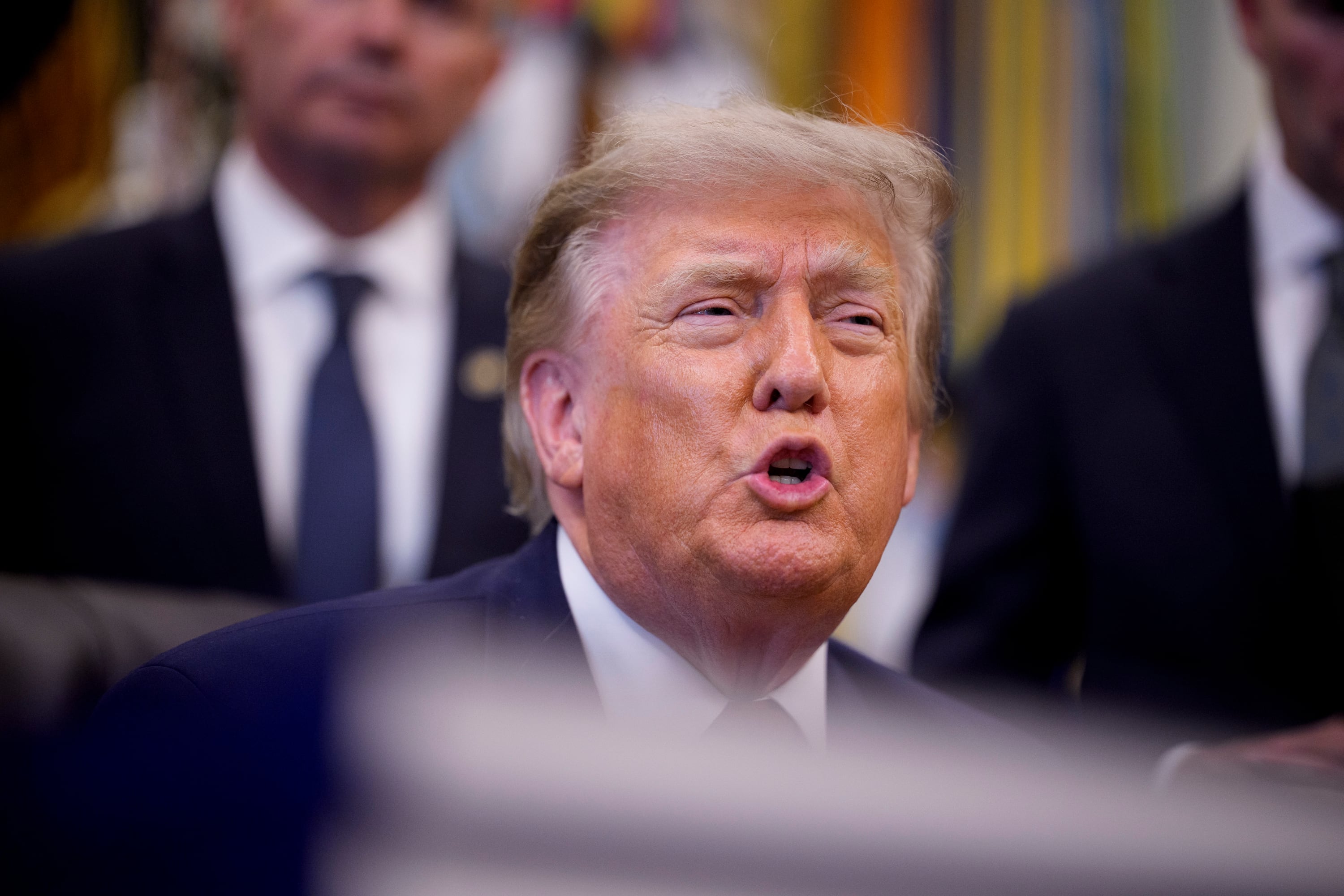
Original post, Aug. 27, 11:27 p.m.: A federal judge on Thursday imposed a new freeze on President Donald Trump’s mail-ballot restrictions, the latest move in a back-and-forth legal battle playing out just weeks before the November elections.
U.S. District Judge Indira Talwani blocked the U.S. Postal Service from moving ahead with plans to regulate mail ballots for at least 14 days while she weighs a more permanent ban on the agency’s new rules.
The temporary restraining order comes just four days after the U.S. Supreme Court lifted Talwani’s previous injunction against the order on narrow procedural grounds. However, voting rights groups and a coalition of two dozen states and the District of Columbia kept pressing their case against the order, arguing that the president had no authority to try and regulate mail ballots.
In her 11-page decision, Talwani agreed and concluded that Trump’s proposals were an unconstitutional attempt to usurp powers from the states over elections.
“The court is unaware of, and no party has proffered, any delegation Congress has made that would permit the USPS to regulate election mail,” Talwani wrote.
Talwani set a hearing for Sept. 3 on the request for a permanent injunction. The Trump administration is likely to quickly appeal her order, a move that will probably propel the case back before the Supreme Court.
In court filings opposing the temporary restraining order, the Trump administration argued that the Postal Service plan was an effort by the federal government to help ensure elections were run smoothly and that the agency was acting within its legal authority.
The monthslong, multicourt legal battle over Trump’s executive order restricting mail voting is taking on increasing urgency as the November election nears. Election officials preparing to send out ballots are faced with a whipsaw of directives.
Trump’s order, issued in March, directed the U.S. Postal Service to set up a new system that would allow the agency to block delivery of mail ballots to voters not on a list presubmitted by state election officials.
It quickly prompted a slew of lawsuits. In June, Talwani found that some of the order’s key provisions were unconstitutional and blocked them from going into effect for this year’s elections.
The Trump administration appealed to the U.S. Supreme Court, whose Aug. 24 ruling paved the way for the U.S. Postal Service to roll out the new restrictions. But the Supreme Court’s ruling dealt only with the question of whether the injunction was premature, with the justices themselves acknowledging it didn’t address the legality or constitutionality of the plan. That set off a new and increasingly complex round of legal wrangling.
Earlier in August, the U.S. Postal Service unveiled its proposal to implement the administration’s mail-ballot restrictions in a 95-page plan that created widespread confusion among election officials.
The Postal Service rules require states to use a new online federal government system to send it a list of all voters who should receive mail ballots. The Postal Service would refuse to send ballots to anyone not on the list. Ballot envelopes would also have to meet new design standards, including unique barcodes that have to be checked by the Postal Service.
The states challenging the rules warned that they would not have the time, money, or people needed to comply in the short time between now and November. Talwani agreed and wrote that the Trump administration’s filings “offer no reply to Plaintiff States’ assertion that compliance for the 2026 midterm elections will be impossible for many of them.”
Democratic leaders across the nation have vowed a fierce fight to ensure that all voters that want to vote by mail are able to do so.
“Over my dead body is that rule going to go into effect,” Arizona Attorney General Kris Mayes said earlier this week, before Talwani’s latest order. “We are going to fight this tooth and nail in the courts.”
Read more Votebeat coverage of Trump’s executive order on elections:
- Trump issues second executive order on elections, giving U.S. Postal Service unprecedented control over mail voting, March 31, 2026
- Trump administration sued by states over mail voting executive order, April 3, 2026
- One line in Trump’s order would reshape how long states have to store election records, April 6, 2026
- We still have questions about Trump’s new executive order on elections, April 6, 2026
- USPS proposal to carry out Trump’s executive order could create new barriers to mail voting, May 29, 2026
- Trump’s moves to erect voting hurdles face race against the clock, June 15, 2026
- Federal judge blocks key pillars of Trump executive order restricting mail voting in 2026 election, June 25, 2026
- Trump administration asks federal judge to quickly lift ban on planned mail voting restrictions, July 2, 2026
- Trump is asking the U.S. Supreme Court to allow new mail ballot restrictions in the 2026 midterms, Aug. 3, 2026
- Federal judge blocks Trump’s efforts to restrict mail-in voting nationwide, Aug. 11, 2026
- Supreme Court lifts 1 of 2 blocks on Trump’s mail-voting executive order, Aug. 24, 2026
- Election officials wrestle with uncertainty amid legal battles over Trump mail ballot restrictions, Aug. 26, 2026
Dion Nissenbaum is Votebeat’s senior national reporter and is based in Houston. Contact Dion at dnissenbaum@votebeat.org.