Votebeat is a nonprofit news organization reporting on voting access and election administration across the U.S. Sign up for Votebeat Pennsylvania’s free newsletter here.
Update, July 31, 8:52 a.m.: This story has been updated to include comment from the Department of Homeland Security.
Pennsylvania state officials are pushing back on the Trump administration’s claim that there may be more than 14,000 potential noncitizens registered to vote in the state.
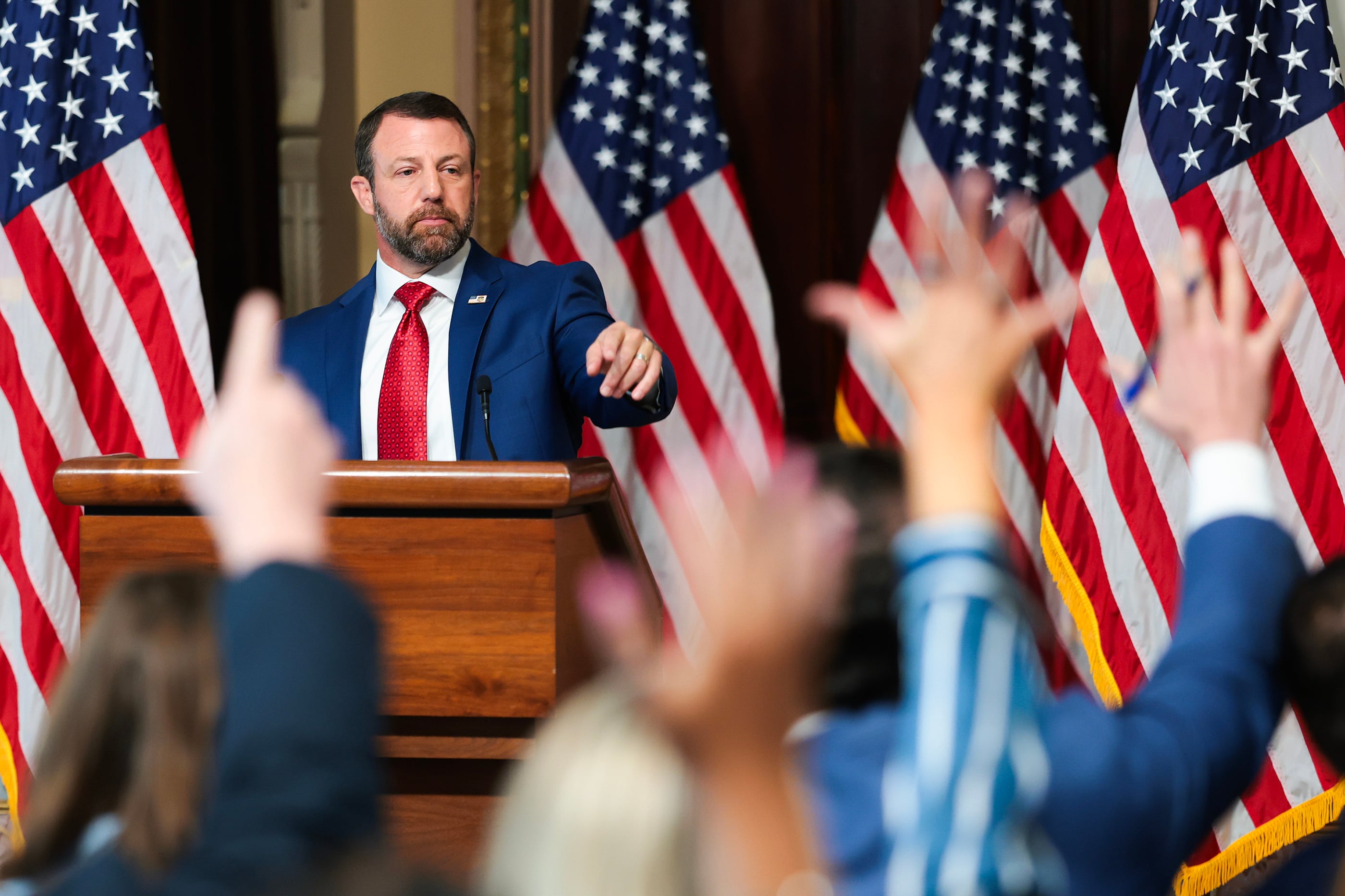
In a letter sent Wednesday to U.S. Department of Homeland Security Secretary Markwayne Mullin, Secretary of the Commonwealth Al Schmidt said the federal government has not disclosed the methodology or data source it used to identify the noncitizens.
Schmidt also pointed out gaps in a program that the Department of Homeland Security uses to identify noncitizens.
“As you know, past analyses of voter lists have relied on faulty methodologies that can lead to inaccurate results and false claims about the citizenship status of eligible voters,” Schmidt wrote. “In fact, the U.S. Citizenship and Immigration Services official who oversees [the program] has ‘acknowledged that the system can’t always find the most current citizenship information for people not born in the U.S.’”
Earlier this month, President Donald Trump gave a primetime address in which he made several allegations of foreign election interference and issues with the nation’s voting systems. One of his claims was that the Department of Homeland Security had identified more than 250,000 noncitizens on the voter rolls of California, New Jersey, Nevada, and Pennsylvania.
In a letter to Schmidt the same day, Mullin wrote that a “preliminary review” had revealed “there may be as many as 14,576 non-citizens registered to vote in Pennsylvania.” A spokesperson for the Pennsylvania Department of State said Thursday that the federal government still has not shared the actual list of those people.
The Department of Homeland Security has not publicly disclosed, or disclosed to the other three states, precisely how it identified the potential noncitizen registrants. Letters to the states said the department used publicly available information but matched some of the potential noncitizens using Social Security numbers. All four states have refused to give the federal government versions of their voter rolls containing that information, saying state law prohibits them from disclosing it.
In a statement to Votebeat, the Department of Homeland Security declined to explain its methods but offered a pointed response to Schmidt’s letter. “If there are doubts, these officials should pick up the phone, not run to the press. Our offer to help them verify their voter rolls still stands,” a spokesperson said. “We look forward to working with them to ensure only Americans are electing America’s leaders.”
The system Schmidt was referring to — the Systematic Alien Verification for Entitlements, or SAVE, program — has erroneously flagged some citizens as ineligible to vote. A judge recently blocked an overhaul of the program, citing in part the accuracy issues.
Dion Nissenbaum contributed reporting.
Carter Walker is a reporter for Votebeat in partnership with Spotlight PA. Contact Carter at cwalker@votebeat.org.