
Election Laws

How to vote early in person, how to vote by mail, key deadlines, and more.

A decline in candidates backing Trump suggests the issue may be losing impact.
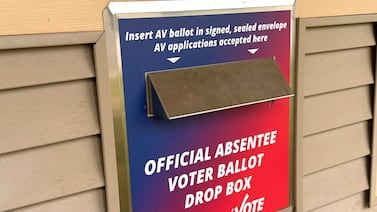
Clerks blamed the short gap between primary and general election and delays at the printer.

Ballots are already in voters’ hands.

South Dakota’s Republican secretary of state offers a rare state-level example of election skepticism colliding with actual administration.
President Donald Trump’s rhetoric has stoked fear that the federal government could try to seize election materials or send ICE agents to the polls.
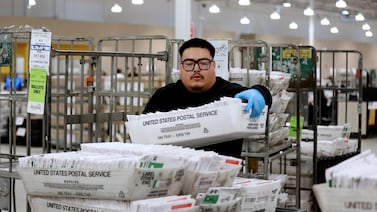
The Supreme Court decision blocking mail ballot restrictions allows election officials to focus on planning for the November election.

Republicans can try to push noncitizen voting legislation, while Democrats may try to implement automatic voter registration.
State officials also referred 117 potential noncitizens for investigation, but confirmed nearly 600 other flagged voters are citizens.
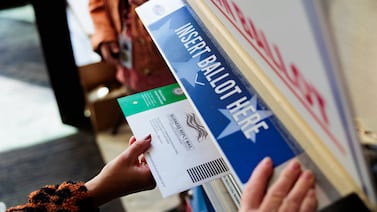
The Supreme Court ruling marked the culmination of a frenzied, monthslong legal battle.
A majority of justices declined to allow the U.S. Postal Service to put new restrictions in place for November.
Mullin has shifted more focus onto elections since July, declaring that “election security is national security.”
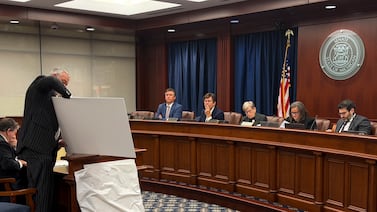
The Michigan Supreme Court said it did not have the power to force canvassers to put the proposed constitutional amendment on the ballot.

Roughly 150,000 voters, most in Maricopa County, received letters asking if they’d moved. Here’s why.
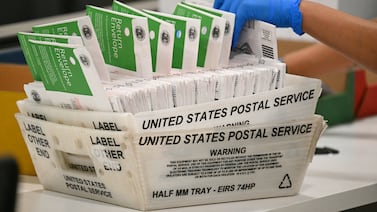
Election experts question whether it’s possible to comply with the Postal Service’s new mail ballot rules by November.
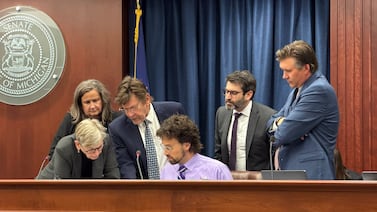
If approved, the amendment would give Michigan one of the strictest proof-of-citizenship requirements in the country.
Monday’s Supreme Court ruling doesn’t end a messy legal fight over Trump’s efforts to restrict mail ballots for the midterms.
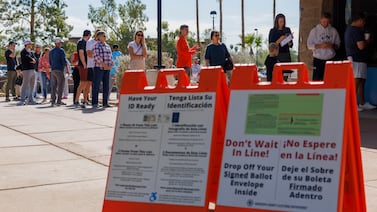
The 2027 removals will be the first under a state law that requires officials to remove voters from the list if they don’t cast their mail ballot for two consecutive general election cycles.

Democratic gubernatorial candidate David Crowley said he was ‘befuddled’ by the decision.
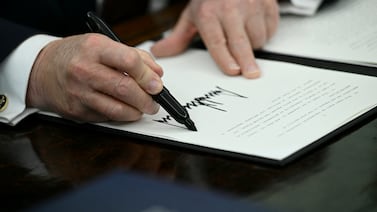
With the midterms approaching quickly, states will likely go back to court.