Votebeat is a nonprofit news organization reporting on voting access and election administration across the U.S.
This news analysis was originally distributed in Votebeat’s free weekly newsletter. Sign up to get future editions, including the latest reporting from Votebeat bureaus and curated news from other publications, delivered to your inbox every Saturday.
It has been a dizzying week of legal challenges and rulings that have scrambled plans for the November election. The end result is… more uncertainty!
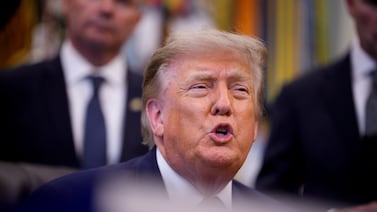
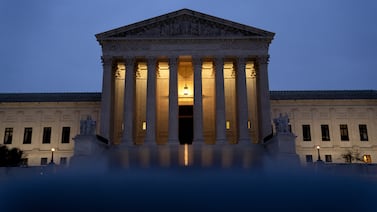
The legal drama spanned three different courts and created a legal tilt-a-whirl that ultimately ended up right where we started: a freeze on the Trump administration’s efforts to impose new restrictions on voting by mail and a likely Supreme Court showdown fast approaching.
The U.S. Supreme Court kicked things off on Monday with a narrow procedural ruling that gave the Trump administration hopes it could move ahead with its plans for the November election. New rules briefly went into effect midweek, but the ruling triggered a new round of legal maneuvering that led U.S. District Judge Indira Talwani to impose a new 14-day freeze on the plans while she considers a permanent ban on putting them in place for this election. The Trump administration has already appealed the temporary order.
The whiplash is creating headaches for election officials with the first mail ballots for the November election set to go out to voters in less than a week and more court action the only certainty.
Since the U.S. Postal Service this month unveiled its proposal to implement the administration’s mail ballot restrictions in a 95-page plan, election officials have been scratching their heads as they try to figure out whether, and how, they’ll have to follow the guidelines.
Tammy Patrick, the chief program officer at the Election Center, a national nonprofit association for election administrators, said there was no way that states would be able to successfully shift to the new system in time for the November election.
Patrick said the rules have created widespread confusion among elections officials who have to rush to meet what seems like an impossible timeline to comply with the regulations.
“The U.S. Postal Service has been a very collaborative partner in delivering democracy,” she said. “This rule is a dramatic shift in both how election officials conduct elections and how the Postal Service delivers democracy.”
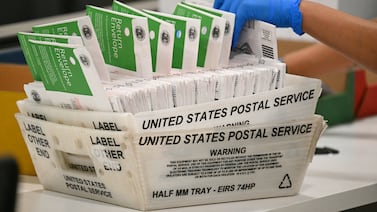
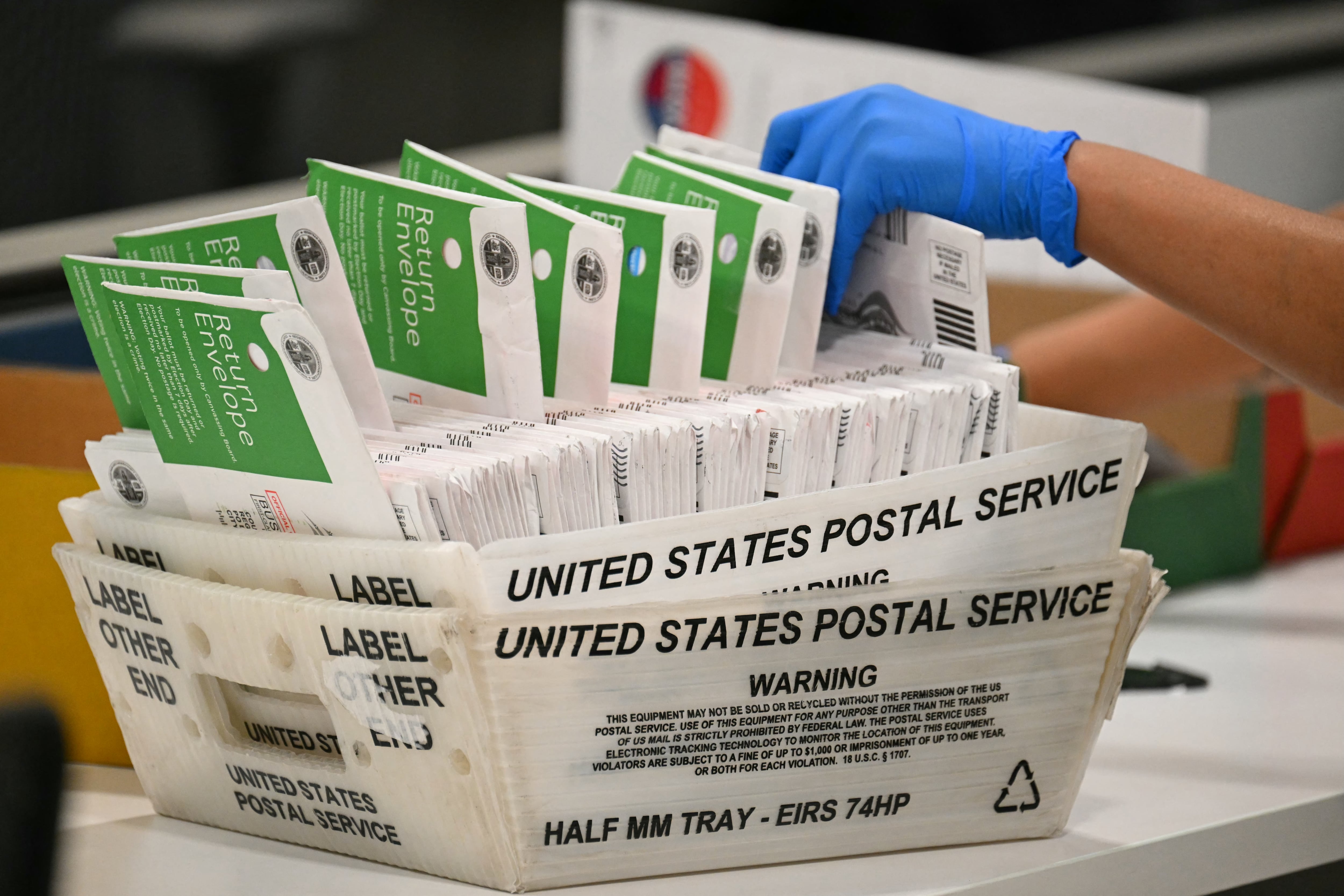
The first challenge for election officials are rules that require them to follow new uniform mail ballot envelope design standards. The envelope going to the voter and the one the voter returns each have to have unique barcodes that link the mail to the person casting the ballot. The envelope designs first have to be reviewed by the Postal Service, something Patrick said seems logistically impossible to do before November’s election.
“We have more than 10,000 election jurisdictions and there are 40 mail design analysts at the Postal Service for the entire country,” she said. “They would not be able to accommodate everybody redesigning the envelopes.”
This change could potentially have the biggest impact on rural counties with small teams of elections officials that sometimes hand-write names and addresses on mail ballot envelopes. Finding a company that could quickly design and produce the new ballot envelopes at this late date seems implausible, Patrick said.
The first mail ballots are set to go out to North Carolina voters this Friday, and a host of other states will also begin sending them out in the coming weeks. And it’s unclear how the federal government would treat ballots that don’t comply with the new requirements but are sent out before the new system is up and running.
During the short window when the Trump plan was in place, North Carolina said that it rushed to comply by submitting its envelopes to the Postal Service for “review and approval.”
“Our office is confident that the county boards of elections plan to send out absentee ballots to North Carolina voters who have requested them for this election, starting September 4, as required by state law, will happen flawlessly and smoothly,” said Jason Tyson, director of external affairs for the North Carolina State Board of Elections.
The U.S. Postal Service did not respond to a request for comment on specific questions about how the new processes will work this year and pointed to an online FAQ that provides broad guidance about how the system is intended to work.
If and when election officials clear the envelope design hurdle, they would then have to compile a list of everyone who wants a mail ballot and help create a statewide list with detailed information — down to the barcode — for everyone eligible to vote by mail. The Postal Service says it will refuse to deliver a ballot to anyone who is not on the list.
Each state would have to submit its list to the Postal Service via a new online portal, and the rule says that would preferably be done 30 days ahead of the election, though that’s not a hard-and-fast deadline. The Postal Service has yet to unveil the new online portal.
Then, things get even more complicated. If a state sends out a large batch of mail ballots and one of them is sent to a voter who’s not on the list reviewed by the Postal Service, the Postal Service could reject all of the ballots in that batch, Patrick said. That could mean that one error might delay the processing of a huge number of ballots and create extra work for election officials. She emphasized that election offices in big counties routinely send out millions of ballots at a time. Election officials would have to check the rejected mail ballots and resend them once they address the problems.
On top of that, she said, the time it would take for the Postal Service to scan each barcode could overwhelm its staff as a flood of mail ballots come through the system.
“This is very, very difficult,” Patrick said. “All of this is untenable.”
The Trump executive order signed in March envisioned a much longer rollout period for the new system. But the legal challenges put the plans on hold until now, giving the Postal Service very little time to put the system into place. The Postal Service has expressed confidence that it can smoothly roll out the plans, but election officials are skeptical and wary.
Dion Nissenbaum is Votebeat’s senior national reporter and is based in Houston. Contact Dion at dnissenbaum@votebeat.org.